Culture
Team
Contents
Contents
Welcome to A Child's Hope Foundation!
We are a people-focused organization seeking to improve the lives of those we serve as well as our fellow team members. You are important to us and we want you to succeed here!
This information will help you understand the foundation’s history and mission, our team’s culture, how we work together, and our plan for future growth. A Child’s Hope is likely a very different workplace from your previous experiences and we believe your time here will give you a new perspective in both your personal and professional life.
Section 1
Our History & Mission
A Child’s Hope Foundation was founded in 2002 by Paul and Carolene Cook. A few years after adopting their daughter Megan from China, the same adoption agency the Cooks had worked with asked them for a donation to help an orphanage in Haiti. They donated, and a few months later, Paul and his son visited the orphanage to see how their donation was helping the kids.
Paul and Carolene and some friends began organizing groups of American volunteers to build an adoption orphanage in Haiti. That orphanage would serve as a temporary home for children waiting to be adopted into families in the U.S. or other countries. A Child’s Hope directly facilitated about 50 such adoptions from Haiti. When the orphanage became independent, over 1,000 children had been placed into adoptive families.
A few years into this work, three factors changed our direction. First, Haiti’s government became unstable and it was no longer safe to take volunteers there. Second, the 2004 Hague Convention on International Adoption, made international adoption much more expensive and time consuming. Third, the 2008 recession made fundraising much harder, leading us to explore affordable ways to keep helping orphaned children.
We shifted our focus to Baja, Mexico, which became a good option for service trips. Even though Mexican children couldn’t be adopted into the U.S., we saw an opportunity to build facilities for babies while their adoptions into Mexican families were processed. Additionally, driving an hour into Mexico was more doable for American families.
So, starting in 2007, we led about four volunteer trips to Mexico every year. Many of these volunteers came more than once, and then brought their friends. As the U.S. economy recovered from recession, demand for family and school-group volunteer trips increased. Awareness of our work grew, and generous donors began to step in. While running Service Trips, we realized that we didn’t have to build adoption orphanages from scratch. Working with different orphanages showed us we could have a bigger impact by focusing on existing children’s homes that had good leadership.
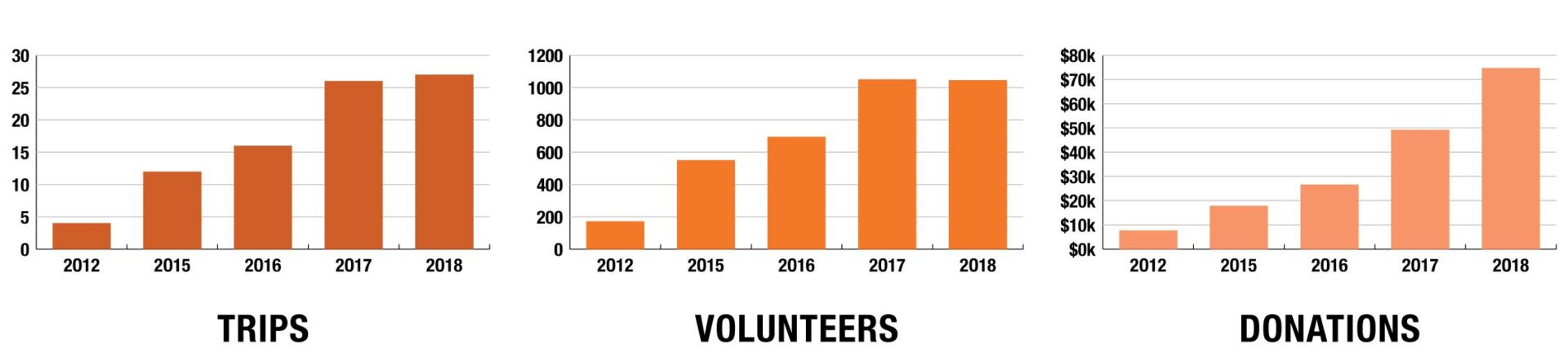
2012 is representative of the years surrounding it in which growth was static.
In 2018 we partnered with Miracle Foundation, who had created a “Thrive Assessment” for the orphanages they supported in India. We adapted this assessment for Mexico and, now, developing the leadership of orphanages and helping them get kids into families is one of our major programs. As we worked with a variety of orphanages we realized there were different levels of support being provided to kids.
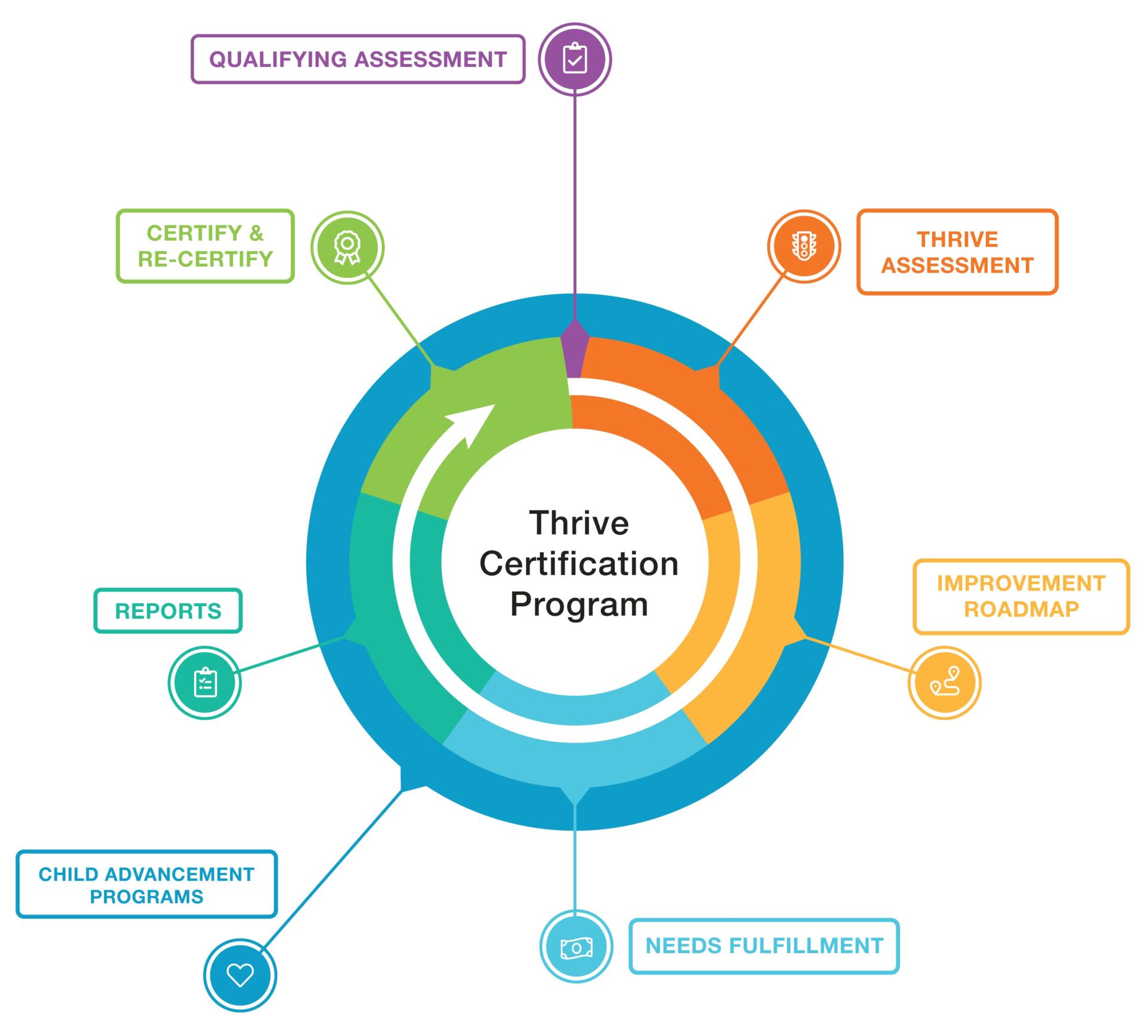
A Child’s Hope Foundation can do a lot of good with promising orphanages. Through our Thrive Tools, we help the directors set goals for improvement, connect them with volunteers and financial support, and train them in the best practices to build trust with donors. By doing this, we can make promising orphanages become a model for other homes to follow, serving as a beacon of hope in their communities.
This is the path we’re walking now, building a system of certification and reporting that makes it easy for donors to trust directors and see the results they are getting for the kids they support. This is a system we are taking across the globe.
We currently have tremendous support and momentum for our work. This has pushed A Child’s Hope Foundation to hire more staff, collaborate with more volunteers and donors, and partner with more orphanages in successfully raising children to adulthood.
Our Mission
To elevate how the world cares for orphaned children.
Because no child should be abandoned to raise themself, A Child’s Hope Foundation exists to equip orphaned and vulnerable children with skills, resources, and community so they can improve the trajectory of their lives.
That is our main focus: helping kids who have been placed in orphanages because they have been abandoned, abused, or forgotten.
But what does it mean to elevate how the world cares for orphaned children?
It means we give these kids the same opportunities that they would have in a healthy family setting. We want to go beyond alleviating the effects of children’s poverty and abuse and give them a better life in all aspects, especially by encouraging their placement into families (foster care, adoption, or reunification with relatives) whenever possible.
The United Nations’ 1989 Convention on the Rights of the Child defined the rights that we are working to give orphaned children:
- the right to live with family
- having a stable, loving, nurturing environment
- quality healthcare
- good nutrition
- clean water
- electric power
- quality education
- equal opportunities
- guidance from caring adults
- participation in decisions that affect them
- to prepare for active and responsible citizenship
- protection from abuse and neglect
- dignity and freedom
- spiritual development
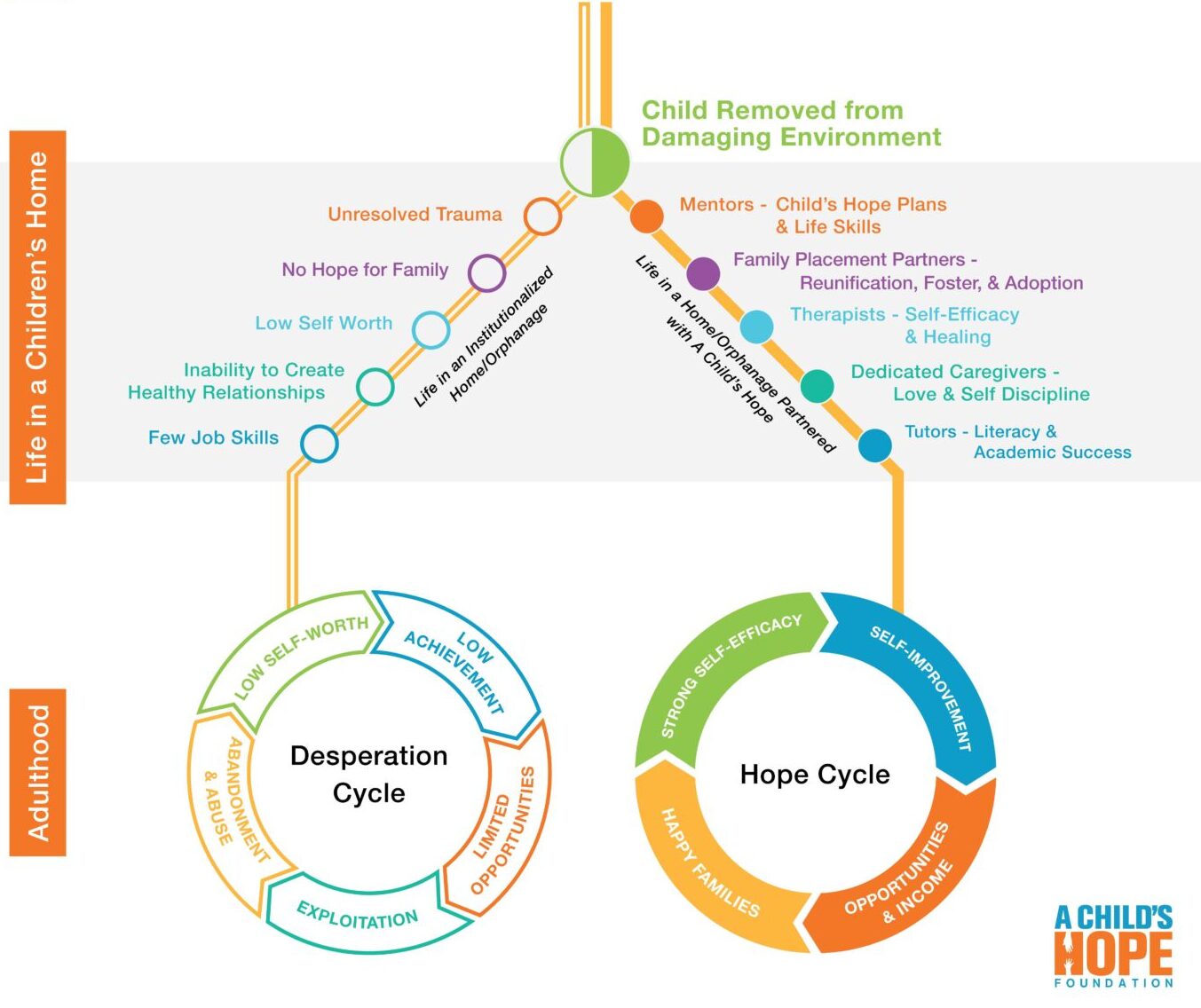
We want to give these kids the hope that comes from first meeting their basic needs and then going beyond that, helping them thrive. Our Child Advancement Priorities (CAP) provide therapists, tutors, caregiver support, mentorship & family placement opportunities so individual children can have hopeful futures. When kids can become adults who contribute in their communities and raise loving families of their own, that is a long-term success for us as well as these homes.
Section 2
Our Team Culture
Core Values
A Child’s Hope Foundation is a people-focused organization. We are not only in the business of serving orphaned children, their caregivers, and volunteers; we are also here to better ourselves as well. Because of this, our team culture is built around three core values:
Stretch, Invest, Validate.
Let’s define these simply before we go into greater detail.
- Stretch: Accept assignments and opportunities to try to do things you aren’t sure you can do well yet. Your job may change quite a bit as you gain your team’s confidence.
- Invest: Take time to get to know your coworkers. Take time to do a project or job well. Be fully engaged in a conversation. Share yourself with others. Give your all.
- Validate: Recognize others’ strengths, weaknesses, challenges, and accomplishments so team members can effectively serve and build each other. Demonstrate your love.
Stretch
Taking on new challenges—including projects you aren’t sure you can do—is a big part of each person’s experience at A Child’s Hope Foundation. Challenges and change might seem intimidating, but here you’ll find that change can be immensely rewarding at the organizational and personal level.
As the organization’s reach expands, we need people to be able to grow, learn new things, and improve the systems we already have in place. Team members must be okay with constant change as we are constantly growing.
It is important to ask yourself: What is my contribution to the team? We want you to share your ideas, try new things, and take risks. That is how you stretch and grow.
Here’s an example. Leksi, who used to be the Service Trip Coordinator, was asked to set up and design our Salesforce database to serve several departments within A Child’s Hope Foundation. Leksi is not a computer genius and she didn’t have any experience with the Salesforce software. She was given this project because Leksi puts her heart and soul into what she does and she knew that the team would support her as she learned and worked with Salesforce experts to implement it. Kent (our Executive Director) knew that she would work hard, be organized, understand the many requirements different people would have for it, and, most importantly, that she would stretch herself to accomplish the task. All our departments now use Salesforce extensively because of the work Leksi has done.
Invest
We invest in our work, but also in each other and ourselves! We believe that by building real relationships we’ll get better results for all stakeholders. This is a place where you feel like working with competent and healthy family members, where you bring your whole self to work, where you can be open and vulnerable with co-workers.
You don’t have to be best friends with everyone, we don’t have time for politics. Because we have lots of productive conflict as a team and strive to make each other better, we have to know and trust each other as people first. We like to say that slowing down to speed up is an essential practice. Take the time to get to know your team so you can work together more effectively.
By investing in each other’s success, we individually become more invested in our work and results. Giving your best for the team also means that you take ownership, both for your assignments and for your mistakes. We believe in learning from mistakes.
Samantha is a good example of a team member who invested in her work because the team depended on it. Sam was the Director of Service Trips, serving on the executive team and managing our trips, led her to realize that she could work better with orphanage directors and help the kids if she lived in Mexico. She wasn’t asked to move to another country, she volunteered to do it. Sam was invested in the mission, took ownership of her role, and did what she needed in order to do her job well.
We aren’t asking you to move to Mexico; though if you want to, we will be very jealous of all the amazing tacos you will be eating! We are just saying that Invest means taking extreme ownership of your responsibilities. You will do what is best for the stakeholders, our mission, and for your team members.
Validate
To validate others means praising their effort and thoughtfulness, not simply acknowledging a job well done. It means we appreciate when you disagree in a respectful way and care about getting great results. We build up each other by acknowledging everyone’s strengths and also by being open about each other’s weaknesses.
When we recognize people’s weaknesses, we discuss how to overcome them, so they don’t become inhibiting. When someone is struggling, whether it’s with the requirements of the job, stress, mental or physical health, the entire team is negatively impacted. Everyone’s sacrifices and struggles are known and valued, but they eventually give up if they don’t know that. And have no illusions—this work is hard! That is why we help each other push through difficult times by validating one another.
Besides showing appreciation verbally, a great way we validate is through Slack to give each other digital ‘high-fives’. This is the place to state how much you appreciate your co-workers, from something they did that week to any other thoughtful and specific compliment.
This lets us see that our individual efforts matter and are noticed. We hope that you take this opportunity to build others up, recognize their strengths, help them with their shortcomes, and acknowledge their struggles. Don’t forget to validate yourself from time to time, too!
Summary of Values
These values—Stretch, Invest, and Validate—are the backbone of our work culture. They sustain an amazing team and drive our success in elevating how the world cares for orphaned children.
Meet Dave Terry. After participating in a volunteer trip with his family, Dave wanted to be more involved. As a business owner, he was already a busy guy, but he volunteered anyway because he knew his background in construction could help the kids. Dave brought his strengths and stretched himself to literally create a job that didn’t yet exist: he became our Construction Project Supervisor. He was invested in the work and built a plan for us to accomplish the construction portion of our mission. Dave participates as an active team member, giving and receiving validation from the start. By stretching, investing, and validating, Dave has advanced the work of A Child’s Hope immensely.
Remember these values. Apply them. We can promise that as you do, you will grow to love them and find the success you desire here at A Child’s Hope Foundation. We are excited to grow with you!
How to Create Value on the Team
You will have lots of opportunities to practice our core values. Some of it is about setting the right expectations for yourself. Some of it comes through the way you engage with your team and the work. Here are some ways you can stretch, invest, and validate at A Child’s Hope Foundation:
Try new things!
Don’t wait for new opportunities to be assigned to you. Take on projects that will allow you to learn new skills.
Start your first day with the expectation that this will be more than just a job.
You are now part of an organization that is elevating the care of orphaned and vulnerable children. This is not the kind of work that you just leave at the office, it will fill your thoughts throughout the day. Be excited about the good you are doing in the world and don’t be afraid to tell others about it.
Cultivate friendships at work.
You already share a commonality with your co-workers in feeling called to do charitable work. You are surrounded by good-hearted, hard-working, self-sacrificing people. These are the best types to have in your circle of friends. Find ways to show that you care about them and want to get to know them. Let them get to know you, too!
We are a very open group of people.
If you are a private person, you will likely not enjoy working here because you will perceive people as prying, rather than as just friendly and concerned. We care about what you have going on in your personal and work life, so share both your successes and hardships with us!
Argue for what you believe in.
Your opinion matters, especially when everyone else disagrees with you! Voice it and defend it respectfully, no matter with whom you are disagreeing. This is a shortcut to crafting great solutions. We see great results when people are willing to engage in respectful conflict.
Equally important to respectful conflict is the willingness to lay aside ego
Support the decisions that are made among the team. If you don’t understand why the team is going a certain direction, ask for clarification.
Be honest about how you are doing.
If you are struggling, explore that with your manager. Sometimes we make mistakes because we take on new projects and feel too rushed. This is normal in a growing organization so make sure you speak up if you are feeling overwhelmed.
Find ways to celebrate others’ successes!
Be diligent about your weekly check-in report, and give sincere High Fives as well as verbal validation to others.
We are in the business of serving people. Find ways to love and serve those you work with. In doing so, you’ll become a better person and the whole team will experience a unifying synergy.
How We Do Pay Raises
Everyone at A Child’s Hope Foundation is encouraged to take ownership of their roles, so we don’t wait around for someone to notice us. Raises are given for taking on more responsibilities and stretching into new roles, not just for doing good work. If you’d like to be considered for a raise, it is your responsibility to bring this up with your manager and propose how you may be able to bring new value to the team.
Section 3
How We Do the Work
Getting Started
You are probably wondering some of those basic questions like “when will I get paid (not everyone is a volunteer), what the hours are like, what are our policies, do I get time off, what will my first day look like,” etc.? Those questions are best addressed during your interview or training and mostly depend on your job, but we’ll cover some of the basics here.
The Wiki
All team members at A Child’s Hope have access to our wiki. This tool contains all our policies, holds important documents as well as an organizational chart, which shows our various committees. Reports are also documented here so everyone can see what is being worked on organization-wide. We recommend that you become familiar with the wiki.
Your First Day and Training Period
On your first day, you will be welcomed and onboarded to ensure you are properly oriented and have everything you need. If you feel overwhelmed, don’t worry! You’ll get to know everyone and understand how our processes work in time. And don’t be afraid to ask questions.
You will most likely be trained by your direct manager and have a weekly one-on-one meeting with that person. As you work on various projects, you may receive quality control help from another manager or team member. That is, you could be managed by different people for different projects, and that’s part of the fun of working at A Child’s Hope Foundation: interfacing across departments.
Your training period length depends on your roles, and it includes becoming familiar with our processes and systems, and learning to focus on getting results. This is also a time for you to begin growing a love for our mission and our stakeholders. We hope that after your first day you leave feeling comfortable and capable in your role.
StandOut Assessment and Working Genius
To achieve success as a team, individual team members must be successful in their roles. We can each be more successful when we understand each other’s strengths and weaknesses. We use the StandOut Assessment and the Working Genius model as tools for having conversations about each person’s strengths. All team members have access to everyone’s assessment results, which are open for discussion. Your results help us know how to help you with your weaknesses and how to magnify your strengths. We refer to each other’s strengths and weaknesses often as we plan who does what roles and different parts of projects.
Knowing your weaknesses can also create opportunities to learn some compensating skills through goal setting. What part of yourself do you want to develop through your work? Are there routines that you might add to your life toward self-improvement? What growth would you like to see in your roles? We encourage you to think deeply about your strengths and weaknesses and set some short-term as well as long-term goals. Your manager and other members of the ACHF team are invested in your success and we will support you in your goals.
Now let’s be clear, weaknesses are not the same as emotional dysregulation. Emotional self-regulation is a skill we expect everyone to work on, but weaknesses may not need to be addressed as often. Weaknesses are good because they allow us to grow, be vulnerable, and connect with others. Weaknesses exist because we have strengths. For example, when you are really organized (a strength) you may struggle with being flexible when priorities change (a weakness). We are open about our weaknesses with each other because then we can help each other work around them.
Getting Results
Everything we do at ACHF is centered on getting results for our stakeholders. To get the desired results, in the words of Stephen Covey, “we must start with the end in mind.” But what does that mean? It means that if we know where we are going, we can make successful plans to take us there. Whether we are assigning tasks in a project, defining deliverables, reporting what we’ve done, or just sitting down and getting the work done, we know what our small piece is accomplishing.
In this section, we will go over who our stakeholders are and how reports, feedback, meetings, and projects lead to results.
Our Stakeholders
- Orphaned children (children who have been abandoned, lost parents, or been removed from their families because of abuse or neglect)
- Caregivers, orphanage staff, and orphanage directors
- ACHF volunteers (those who join Service Trips and serve internationally, and those who work with us locally in the U.S.)
- Donors
- Members of our Board of Directors
- Staff Members
- Communities that touch our spheres of influence
Stakeholders are the people who are impacted by the results we produce, so we strive to increase the benefits they receive from our work. When we are defining the results we want from any project or work routine, we consider the following:
- Who are the stakeholders that will be affected?
- How will this work benefit them?
- How do we measure our effectiveness?
Once we are clear about the results we want to deliver for our stakeholders, we can monitor those results in a few ways.
Reporting
You will hear Kent White, our Executive Director, say over and over that we are a reporting organization. Our goal is to be so good at reporting that our volunteers and donors can be amazed by actually seeing how far their contributions go.
Your Scoreboard
Every employee has a scoreboard, which is a Monday Board with the most important roles that each person is responsible to fulfill. These responsibilities are set by the employee and their manager and helps each person stay accountable. Scoreboards are completed every month and it helps managers make sure you’re not buried with more projects than you can handle. It also helps us see where our processes need to be improved.
For example, one scoreboard item for the Volunteer Experience Coordinator is whether trip payments arrive on time. This is important because on-time payments means people will actually show up for a service trip. Of course you won’t have 100% control over whether or not these expectations are met. In this same example, the Volunteer Experience Coordinator can’t enter volunteers’ credit card info for them. However, they influence on-time payments through reminder emails, calls, texts, etc.
If you struggle with reporting, be ready to develop a new habit. This is one of the crucial ways that we make sure we are getting results for our stakeholders, which is the primary reason behind reporting. We are one of the best at reporting among nonprofits our size, so be ready to become the best with us. Remember–your manager is there to help you accomplish your goals and achieve the results our stakeholders deserve!
Weekly Check-ins
Everyone on the team shares updates through a weekly check-in report, following a Monday Form’s prompts. We write about how we felt during that week’s work, what we accomplished, and what we might need help on. Only you, your manager, and the Executive Director have access to your full report and feedback.
The What’s New section of check-ins are shared with the whole company on the “What’s New” report that is emailed by the Executive Director. This report is sent every Monday and shows progress while inviting validation among team members.
Monthly Report
Every department has its own reports, and specific data from those reports feed into the company monthly report that is sent to the board of directors and donors. This comprehensive report includes statistics, graphics and charts, progress on Objective Key Results, and more. The board of directors is the primary stakeholder, but everyone gets an email copy of it, and it’s also on the wiki. This is one way to see the progress each department is making and contributing to our mission as a whole.
Feedback
Have you ever heard someone else’s opinion and learned something new? Has it ever changed your thoughts? Because we all have different backgrounds and insights, giving your opinion on a subject or matter that might be up for discussion is very important.
Sometimes people get scared to share their opinion. They worry about creating conflict, or about antagonizing others. Please know that when your feedback is given respectfully and is focused on improving results, it is welcome. We like constructive conflict! Our Chief Impact Officer, Amber Young, had been with us for about three months when she said,
“I never thought I would enjoy ‘fighting’ with my boss—but here, the ‘fights’ are a showcase of how much we care. Our culture allows conflict (I may even say, requires). If and when there are disagreements, we don’t get defensive, offended, or silent—instead we dive in, head first, ready to find the best way forward. Kent embodies this—I’ve been so frustrated at times (most often it’s at him) yet he welcomes the disagreement, the questions, the concern, and lets us ‘fight’ it out and then carry on. And I’m not just saying this. It’s all real.”
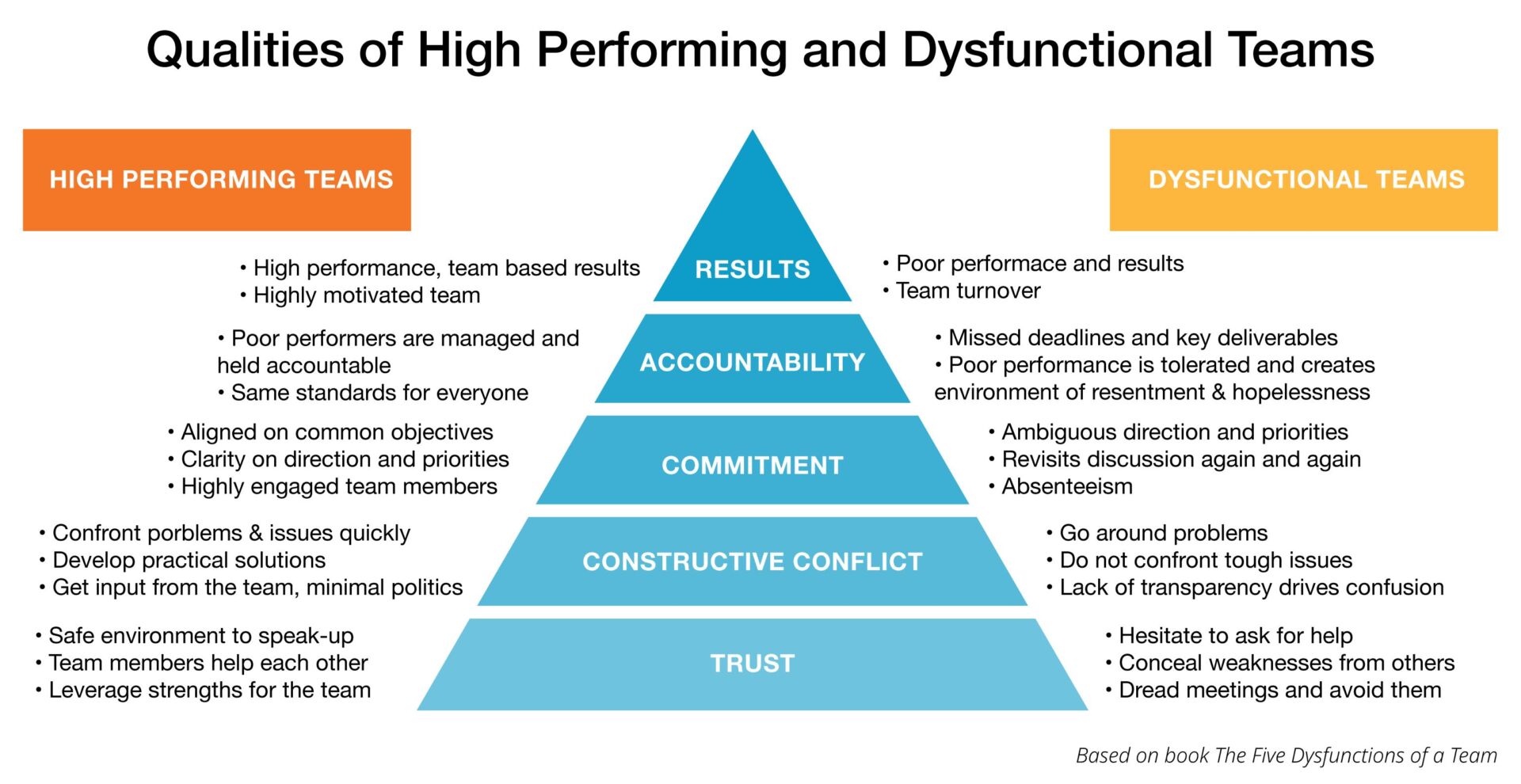
When feedback and opinions have been shared, we are able to come to an agreement that everyone supports. If one person doesn’t support the decision because they didn’t feel heard, that sows the seeds for future failure. The diagram at the end of this section is from The Five Dysfunctions of a Team by Patrick Lencioni. Kent is happy to personally buy you the book if you want to read more about the type of team we work to maintain at A Child’s Hope Foundation.
Feedback is a two-way street. This means you almost certainly will get your feelings hurt at times. If you still feel bad after a day or so, talk about it with someone with the intention of investing more deeply in the relationship with the person you see as having hurt your feelings. It is important that we recognize our emotions and talk through them instead of getting passive-aggressive.
Sometimes you might feel like others are just giving contrary opinions to play devil’s advocate. But they might have a point, so be open to challenging your own thoughts and opinions. Be willing to stretch and invest in those relationships, especially if the other person seems to always have a different opinion.
Meetings
Meetings can feel like a waste of time and that’s why some people aren’t too eager to attend them. However, when meetings are focused on getting results, they can actually be a lot of fun. Our meetings are effective, mostly efficient, and hopefully energizing because it’s through them we figure out how to make things work. If you found yourself in a meeting where you didn’t share an opinion, you probably didn’t belong in that meeting. More on that later.
For now, here is a list of the different types of meetings that keep our organization vibrant.
One-on-Ones
Staff member and her or his manager.
Correlation Meetings
Members of one department meet with others to discuss the status of specific projects.
Check-ins
A quick personal or team check-in to prioritize the day.
Team Meetings
Standing meetings for the different departments, directors, or other teams.
Task Force Meetings
Task Forces are teams of volunteers and staff that respond to a specific project request. Our Task Forces unite people and their passions to projects in order to help elevate child care.
Strategy Meetings
Ad hoc meetings that include those individuals who can help with a new project or specific problem.
All-Hands Summits
Infrequent gatherings for all staff and regular volunteers. We look at the big picture, hold trainings, play games, and celebrate progress.
Training Meetings
Meetings where we learn about specific roles, technologies, processes, etc.; called as needed to include those who are affected.
Team Building Activities
Get-togethers outside of work hours. (See Section 2 – How to Create Value on the Team.)
Working Meetings
Scheduled as needed, this is two to four people working on a project together to actually dig in and get it done.
Let’s highlight a few of the meetings in this list.
The weekly one-on-one with your manager is a major one. You are in charge of the agenda, so this is the place to get clarity on issues that came up over the week, but didn’t require immediate action. You prioritize the list and your manager’s concerns can go to the bottom of the list. Be specific in this meeting so you can come away with action items to complete over the next week. One-on-ones also let both people give and receive feedback in the work they are doing.
Working meetings are great to tackle a problem or project, especially when you’re feeling stuck. They are helpful because you can pull in others whose strengths complement your weaknesses. Working together also strengthens friendships throughout our team. Remember, you’re not alone, but you will feel like it if you don’t ask for help.
Every meeting needs a purpose. While regular meetings have a written agenda already established, ad hoc meetings need a dedicated document to provide this purpose. This is where Meeting Memos come in. Meeting Memos will set the guidelines for people to follow and make sure the meeting is a good use of everyone’s time. (To learn more about how to have effective meetings, read the book Death by Meeting by Patrick Lencioni).
Another practice for effective meetings is that we encourage healthy conflict. We don’t go around the table asking each person what they think, so do not wait to be called on to share your opinion. Mostly we just jump in after the speaker takes a breath, which makes the person running the meeting the mediator so we don’t talk all at once.
We foster a feeling of trust on our team, so we are comfortable talking passionately and not worrying about hurt feelings. You need to be assertive and jump in with your comments, occasionally interrupting. If this is not your communication style, you may struggle on our team; so talk openly about that struggle and we will figure it out together. Again, we need your opinion, so speak up!
We do have a lot of meetings across the organization, but our Thursdays are blocked out for deep work wherein no standing meetings are scheduled. Use this day for ad hoc or working meetings only.
Meetings are also effective when everyone is clear on decisions made and tasks assigned. Everyone should take their own notes and capture the tasks they accept. If you don’t have any tasks or weren’t asked to be in a meeting for your expertise, you should consider removing yourself from that meeting to optimize your time. If you have more than six people, a different meeting may need to be set up.
Avoid meetings where you have nothing to add. If you realize your time is better spent accomplishing tasks than by being in a meeting where you will only be needed for one or two agenda items, get out of it. Exchange instant messages, or get information from the weekly report, rather than attending a meeting when possible. As we grow and our processes mature, you’ll find that you aren’t as needed in meetings that you used to attend. And that’s great!
So there you have it. We hope you’ve changed your mindset about meetings, even just a little. At A Child’s Hope Foundation, we work hard to have engaging and meaningful meetings that allow us to grow closer to our mission.
Communication Expectations
It is vital that we communicate with each other to make decisions. Here are some rules of thumb on the expectations we have on how to effectively communicate as a team!
I need to talk, but not urgently, just within the next 48 hours: Monday (if about an assignment/task).
If you need an answer on something within a couple of days from a team member, then you might (but probably shouldn’t) use email. Most of the time, a direct message within Monday is treated the same as an email. For both emails and Monday messages, we expect that you will respond within at least 48 hours. You can also have group conversations within a Subject or a Task in Monday, so when it is about a specific task or issue, that is usually best.
I need to talk, but just respond sometime today please (unrelated to a project/task): Slack
If it’s not related to a specific project or task, use Slack. We expect you to respond to Slack messages within 24 hours. When you have a question and don’t want people to drop things to respond but you need input to move forward and a same day response, try Slack. It’s like texting, but people know it isn’t as urgent.
I need to talk now, like ASAP! : Call/Text
If you need something immediately, call that person. If they can’t answer, text them saying you need to talk asap. Text messages are also kind of urgent, say, within 3 hours (though people do need to sleep, so be cool about not texting too late).
Now, a few words about email (and Slack). Email/Slack can be pretty terrible if you start using them as your to-do list. We don’t use it to task other people on the team. Instead we use Monday. Email is most useful to send information to multiple people, mostly those outside the organization. So if an email/Slack contains a bunch of information and you want people to read it for a task, then please say so at the beginning of the email/Slack and task them within Monday so that it doesn’t fall through the cracks. Which leads us to projects..
Project Management
Projects at A Child’s Hope are fun because they are challenging and force you to learn new things. As you learn to manage your tasks and projects, you will accomplish a plethora of good work, and you may find that project management improves other areas of your life. For larger projects that you may need a separate project manager for (to keep you on track) or if you need to delegate assignments, we also have a template for Project Briefs that can be used and submitted to the Tactical Management team by anyone on the team.
The most important thing to understand about any project is that it is a collection of tasks organized toward getting a specific result. You can’t finish a project without completing a bunch of tasks, so you should never have a project on your to-do list as if it were a task. A task is any single step that moves you closer to completing a project. Really, good project management is good task management. Slow down to get clarity so you can speed up in the long run!
Here are some tips for good task and project management that you will put into practice at A Child’s Hope Foundation:
- You will need to schedule 20-60 minutes a week to review your projects and reprioritize them. This is called a Weekly Review and if you fail to do this, your work life will get very difficult very quickly, especially if you are a manager. Please ask Kent for his checklist for Weekly Reviews so that you can turn this into a habit. It is vital to managing your projects successfully!
- Avoid plural deliverables. A plural deliverable is a sneaky way for one task to become two. If your task includes the word ‘and’, ‘too,’ ‘also,’ or anything plural, break it down and create another task. For example “Follow up with the Jones and Smith families for trip payments” should really be two tasks: “Follow up with the Jones family” and “Follow up with the Smith family”.
- A task should never require more than two hours to accomplish. If it does, break it into subtasks.
- One task should never require you to report results to more than one person. Why? Because it creates confusion and you might report to one and think you reported to the other. If you need to report results to two people, break that into two subtasks where you can check off reporting to one person and then to the other.
- If your task has been stalled or past due for a week, make the next step even smaller.
- Especially in the setting of a meeting, make sure each task has an owner. Don’t just assume that someone will get that task done. Attach a name to it, even if it’s your own.
- Speaking of owning your tasks, be sure to capture them in a system as soon as you get them. We use a task management software called Monday to track progress on projects. You’ll be trained on that tool. The main point is that you have to build the habit of documentation to be successful around here. Writing your tasks is also helpful when creating repeat projects because then you already have the process documented.
- If you also want to use pen and paper to track your tasks, or you have a different process for task management, that’s fine. But the point of having a system we use as a team is so that your manager or another member of the team doesn’t have to ask you where you are at, they can just look and see. Think of Monday as part of your reporting, not just a task management tool.
Recap
The following graphic, from The Five Dysfunctions of a Team by Patrick Lencioni, illustrates qualities we aspire to embrace as a team at A Child’s Hope Foundation. We hope you can see that our culture and the way we do our work is focused on getting results for our stakeholders. You are one of those stakeholders too! In this job, you will be part of an environment of trust, constructive conflict, commitment, accountability, and getting results. Be prepared to stress, grow, build this organization, and ultimately change lives for the better!
Section 4
Why We Want You
Nonprofit People
If this is your first time working for a nonprofit, just know that nonprofit people are a real thing- they are people who love their job and the people they work with. These are the people who find a lot of purpose in the work they do, are willing to sacrifice, try new things, and work really hard to contribute to the good in the world. But this isn’t easy work, so be prepared to grow as a person during your time here!
Why we do what we do
We are here for people. We are here because we are passionate about Changing How the World Cares for Orphaned and Vulnerable Children. We are here to Invest, Stretch, and Validate. We are here for our stakeholders: the Orphans and their Caregivers, our Volunteers and Donors, and the team members of our Board, Committees, and Staff. We are driven by the desire to effectively serve others.
It is a wonderful thing to see children’s lives changed for the better because of our work. A few years ago, we received a report about Maria, a 12-year-old girl. When Maria arrived at Rancho de los Niños, she didn’t know how to read or write, and had a speech impediment. Despite the fact that she was nearly a teenager, she was placed in 1st grade because she was basically illiterate. She worked really hard with a tutor, Lee, and our speech therapist/extended volunteer, Vicky. After four months, she could write down what someone said and read it back to them. She was then able to move up to a 5th grade level! Without our programs and a volunteer who dedicated her time, Maria would not have been able to make these strides.
Kassidy Hancey from our Marketing Team puts it this way: “A Child’s Hope Foundation isn’t looking to provide short-term relief to the children. Instead, we are looking to create fundamental change to the direction of each individual child’s life so they can grow up with the support they need in order to accomplish their dreams.”
We hope you are ready to make some dreams a reality!
Thank You!
Thank you for investing your time into learning what it’s like to be part of the team at A Child’s Hope Foundation. Whether you join our staff, join a service trip, or just tell other people about us, we hope you will support what we do at A Child’s Hope Foundation for years to come!